This website use cookies to ensure you get the best experience on our website
Rethinking Teacher Education: Insights from the Dialogue Lab in Madrid.
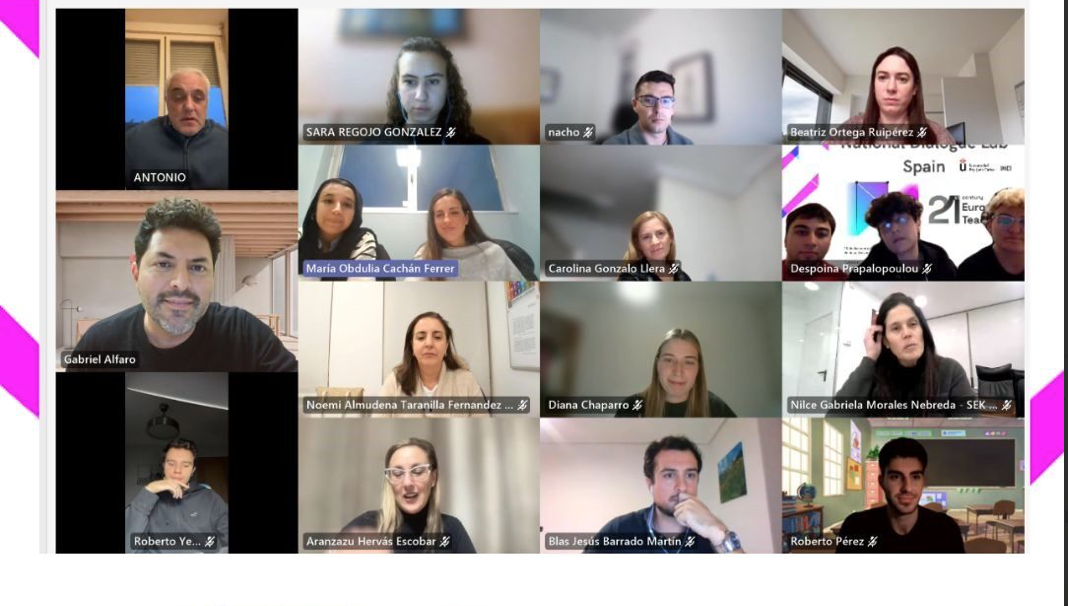
The National Dialogue Lab (NDL) in Spain, hosted by Universidad Rey Juan Carlos (URJC) in Madrid, brought together stakeholders to reflect on how Teacher Education in Spain can better prepare educators for 21st-century teaching within a European framework.
Before the final online session held on 10 December 2025, two pilot workshops were organised in person with teacher students (November 2025) and teacher educators (October 2025). These sessions helped refine the methodology, discussion questions and facilitation process.
The final online NDL was structured around four dialogue sessions and brought together 24 participants, including teachers, education leaders, teacher educators and teacher students. The results presented here bring together insights from all national workshops, combining perspectives from both face-to-face and online formats.
Key challenges identified
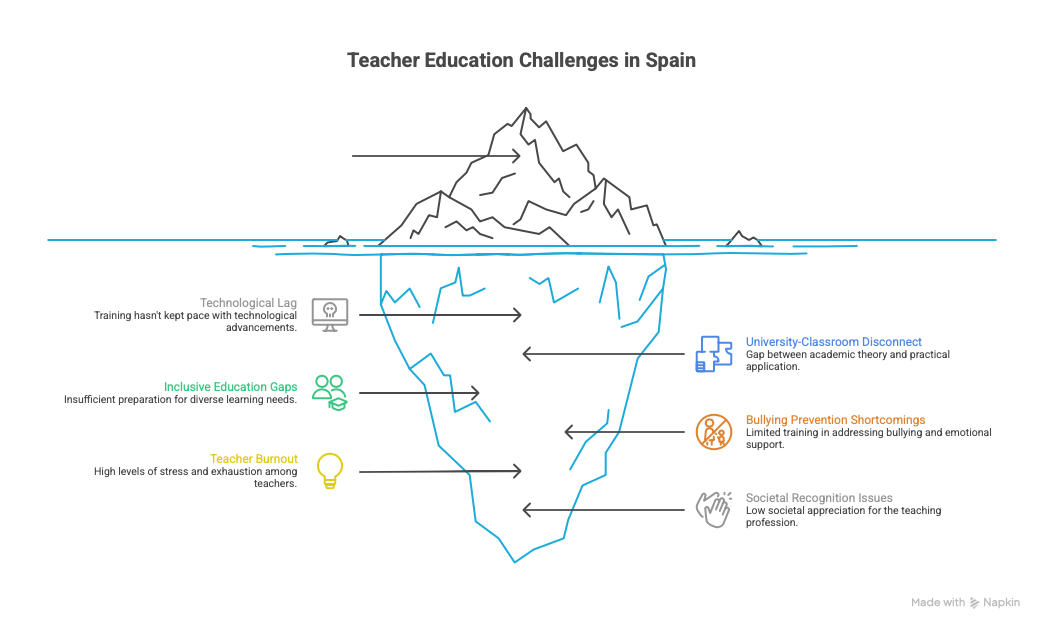
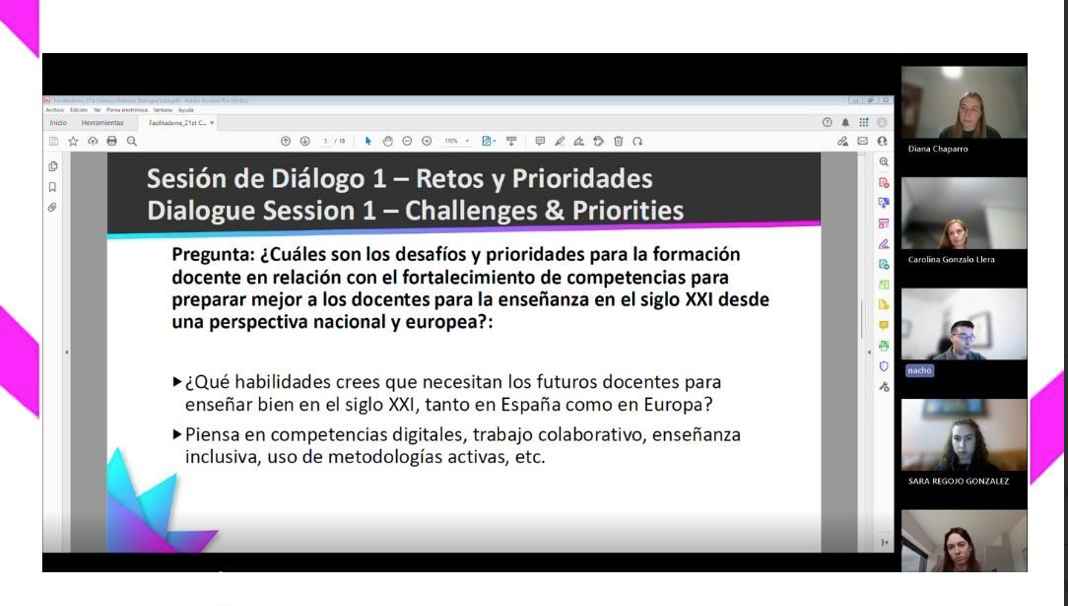
The first dialogue session pointed to several key challenges in Teacher Education in Spain and across Europe. Rapid technological developments, including artificial intelligence, are evolving faster than Teacher Training, which often remains focused on basic digital skills rather than their pedagogical use.
At the same time, a persistent gap between university training and classroom reality leaves many teachers underprepared to deal with diversity, inclusion, emotional well-being, bullying and administrative demands.
Participants also raised concerns around limited preparation for inclusive education, insufficient training in bullying prevention and emotional support, as well as high levels of burnout and low societal recognition of the teaching profession, particularly in Spain.
Strategic priorities and policy recommendations
The second session explored how the 21st Century European Teacher Co-Education Model could be integrated into national systems.
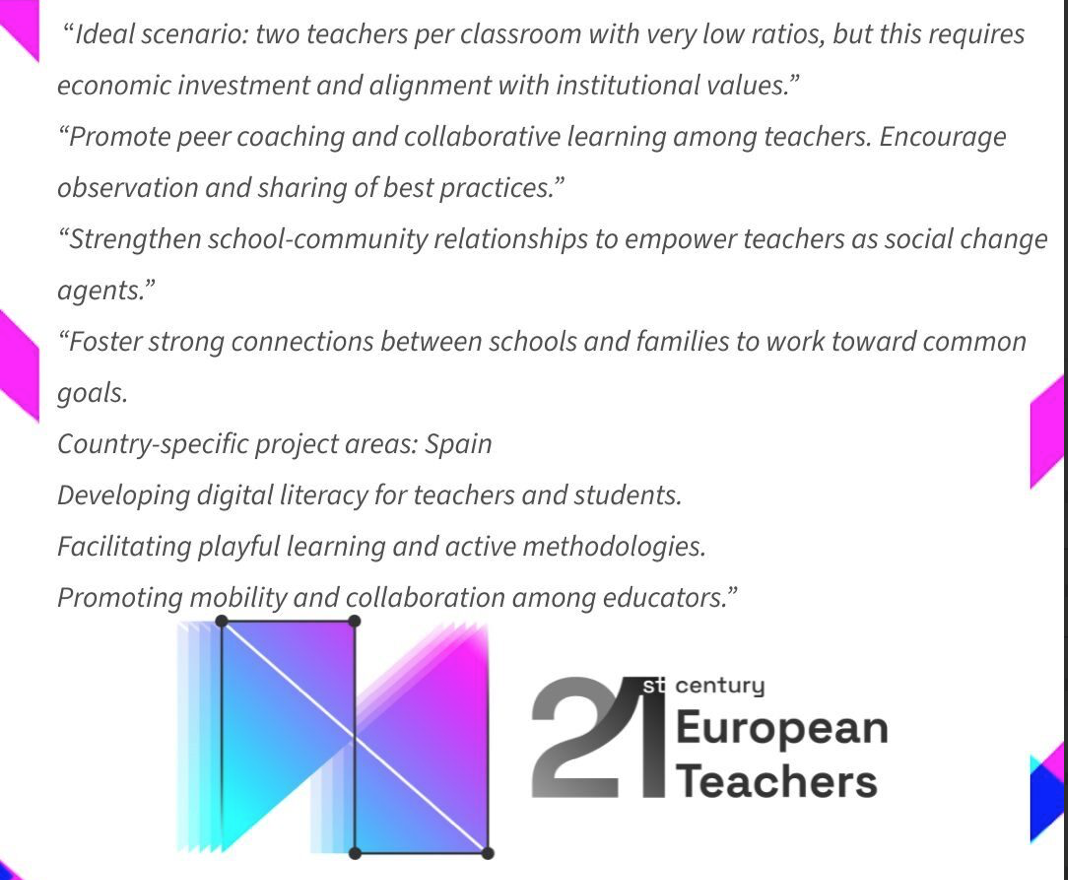
A strong emphasis was placed on better aligning Teacher Education with classroom realities, for example through extended practicum experiences, closer university–school partnerships and the development of co-teaching and peer coaching approaches.
There was also a clear focus on Continuous Professional Development, alongside the need to strengthen digital and AI-related competences, multilingual education and participation in European mobility programmes such as Erasmus+.
In addition, strengthening links between schools, communities and families was seen as an important condition for more inclusive and meaningful learning.
Implementation challenges and solutions
Discussions then turned to the barriers to implementation. Limited resources, unequal funding, teacher shortages, time constraints and resistance to change were all highlighted as key challenges.
To address these issues, participants pointed to the need for more targeted investment, better use of European funding opportunities, and the development of professional learning communities and collaborative networks.
The idea of more structured teacher pathways also emerged, including more rigorous selection processes and residency-style induction programmes that allow novice teachers to co-teach alongside experienced professionals.
Engaging stakeholders through collaboration
The final session focused on the importance of collaboration. Bringing together teachers, school leaders, universities, families, students, policymakers and communities was seen as essential for meaningful and lasting change.
Participants highlighted the value of structured networks, peer observation, intergenerational dialogue and participatory spaces that allow for student voice, all contributing to a stronger sense of shared responsibility.
Conclusion
The National Dialogue Lab in Madrid points to the need for a more coordinated and collaborative approach to teacher education reform. Strengthening professional identity, investing in continuous learning, promoting European cooperation and improving the social recognition of teaching all emerged as key priorities.
Building on these elements, the 21st Century European Teacher Co-Education Model offers a way to support teachers in responding to the evolving demands of education and to contribute to more inclusive, innovative and resilient education systems.

Funded by the European Union. Views and opinions expressed are however those of the author(s) only and do not necessarily reflect those of the European Union or the European Education and Culture Executive Agency (EACEA). Neither the European Union nor EACEA can be held responsible for them.